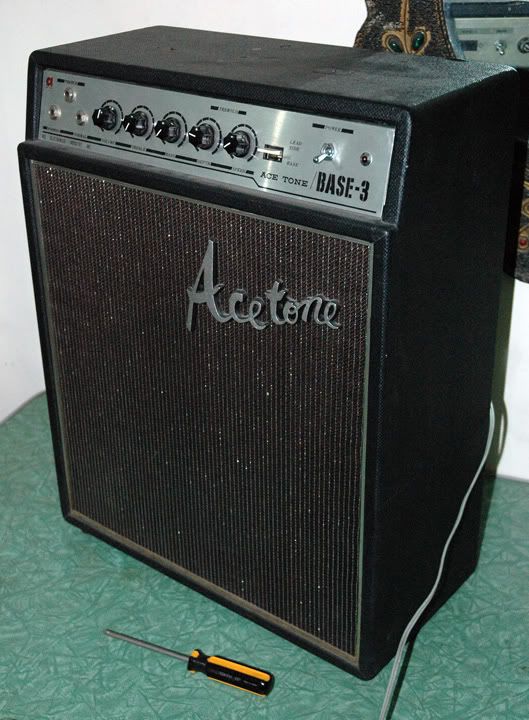
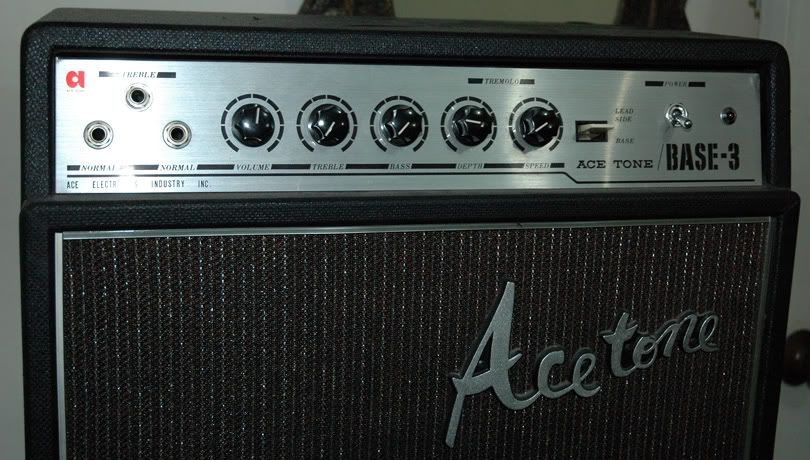
aka Ace Tone A-3B Tube Amp
1960's?
Made in Japan, 100V
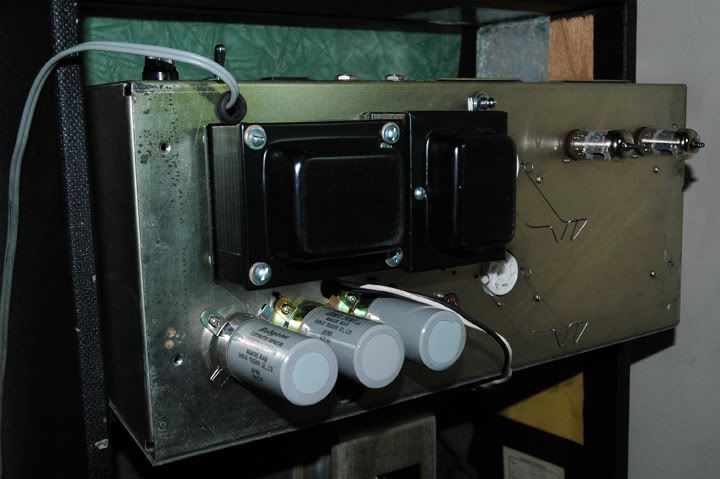
Tube Complement: 2 x 50H-B26 power tubes, 2 x 12ax7 preamp tubes, 1 x 6av6 tremolo tube
Speaker: 8-ohm, Alnico 12in., Ace Tone branded
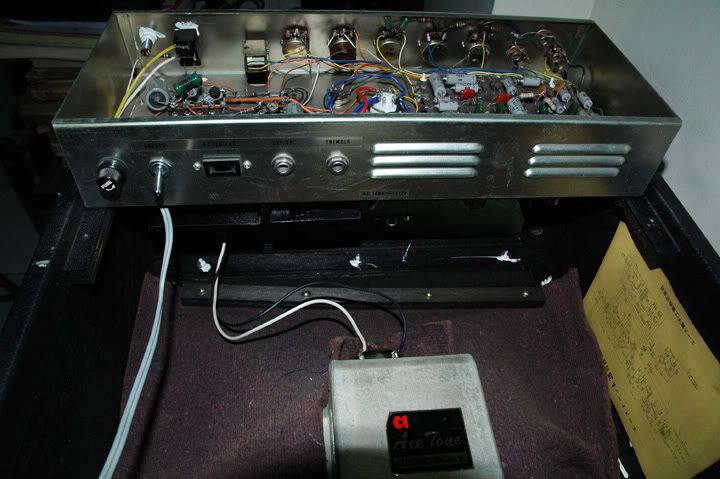
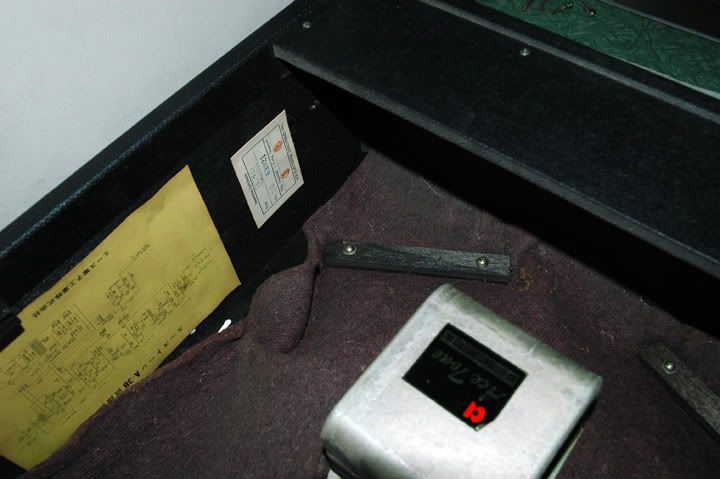
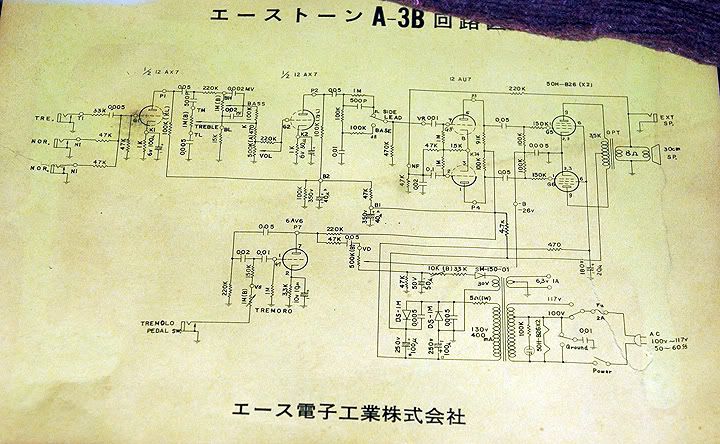
I've searched and searched and searched and could not find any information about this amp from the net. Fortunately, the amp came with a full schematic so all is not lost.
This is a highly intriguing amp. In original form, it uses an unheard-of power tube, namely, 50H-B26. Some info are available on the net for this tube so this is another plus.
This tube requires 50V AC for filament power and the filament of the 2 power tubes are connected in series at the primary side of the power transformer, getting filament power directly from the 100V Japanese house voltage.
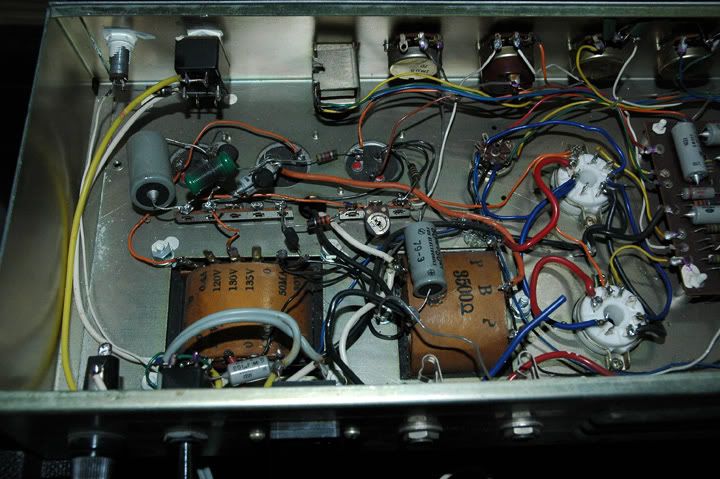
This explains why the 6.3 V output of the power transformer is designed for 1 Ampere only. It only need to provide filament power to two 12ax7s and one 6av6 tube. The power transformer therefore does not need to be so big.
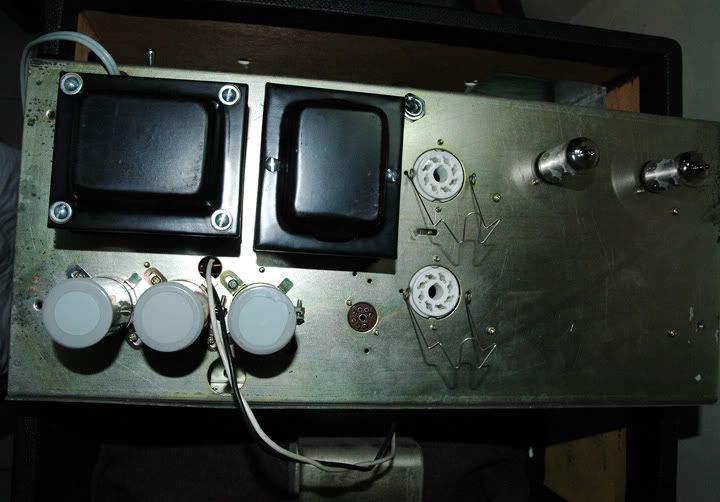
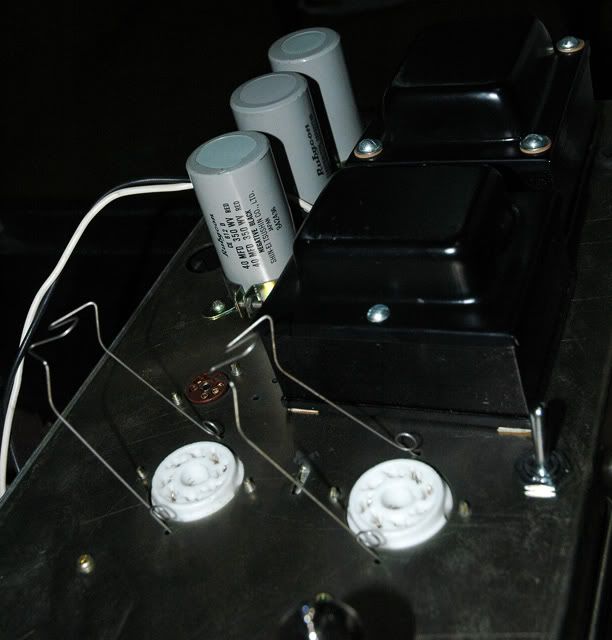
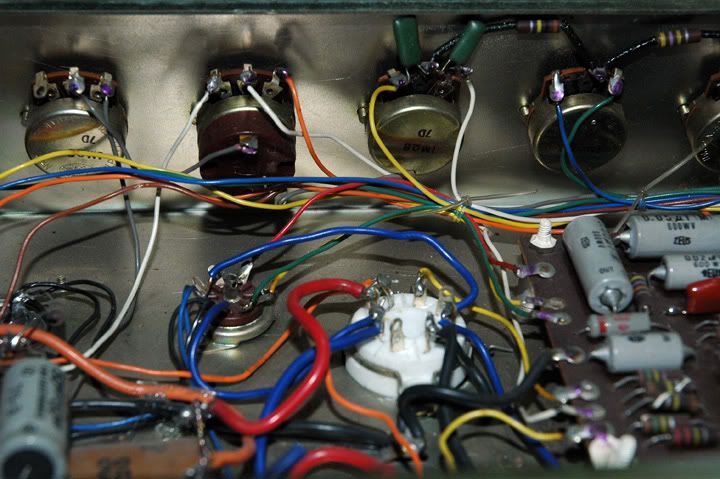
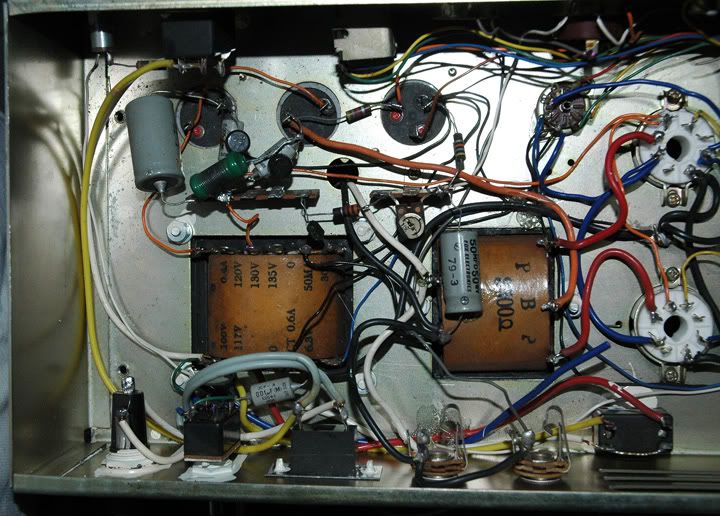
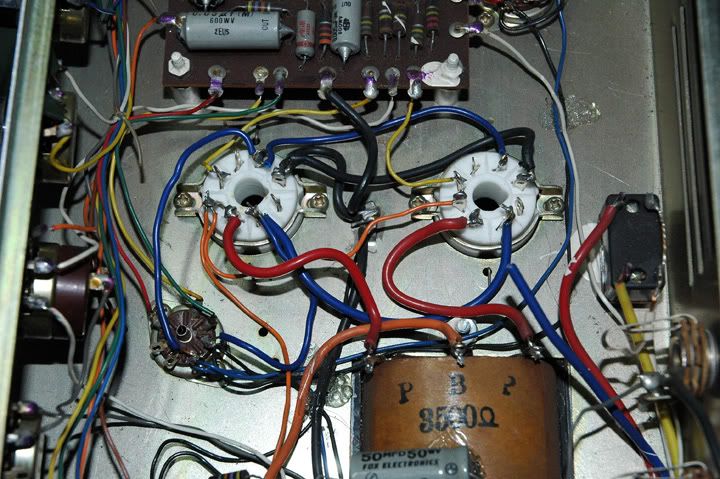
When I got it, the power tube bases were already converted to accept 6V6s. Whoever did the conversion did not scrimp on the tubes as they were DELCO brand 6V6s. The replacement tube bases used are ceramic type.
The work was done cleanly and looked like it was executed by somebody who knows what he was doing. Only upon consulting the schematic and looking closely on the actual amp components did I realize that the amp did not originally use 6V6s.
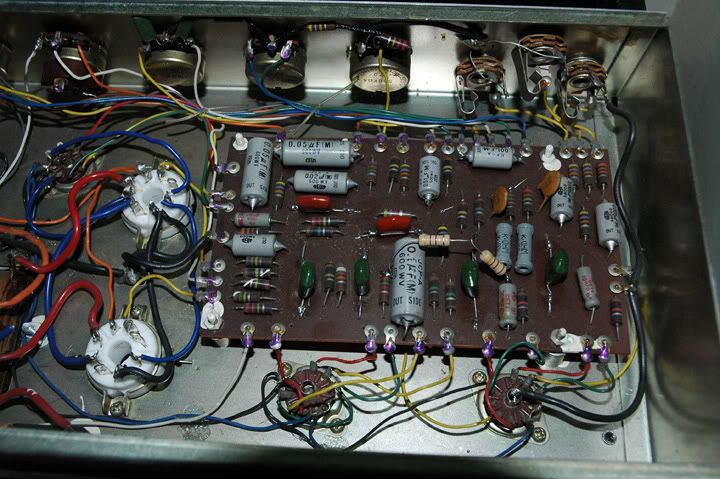
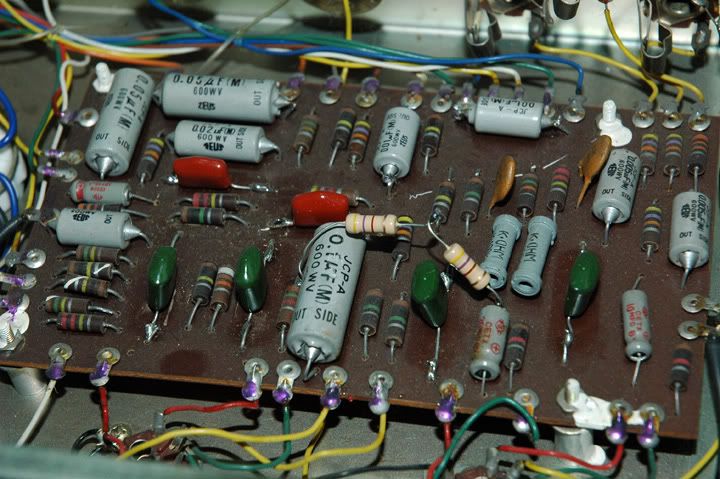
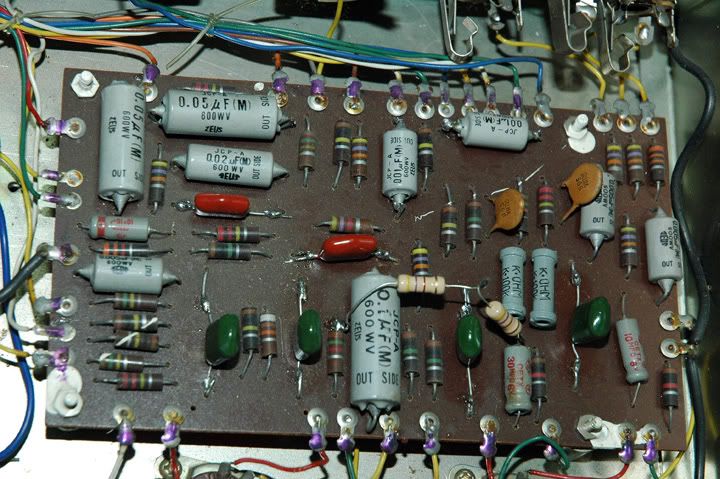
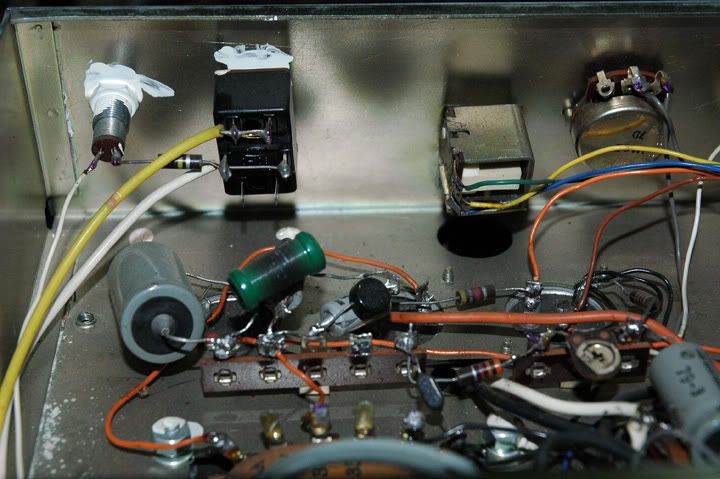
There is a minor modification done in the circuit board that does not look like it was done by the same person who did the tube conversion. It looked like temporary work to make a test. Fortunately this is easy to undo.
A number of the original paper-in-oil caps in the circuit board have been replaced.
The amp works and sounds good when I got it though there were no provisions made to supply the additional filament current required by the two 6V6s. It doesn't seem to have the power that could be expected from a push-pull 6V6 powered amp. This is most probably due to the lack of filament power to the preamp and power tubes.
I feel that the amp can give more output once a proper power transformer is installed or an additional filament transformer is added to supply the filament current required by the two 6V6s.
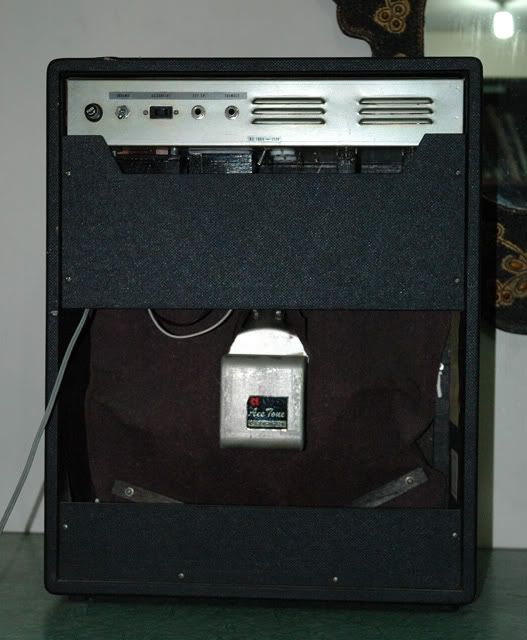
The 12-inch Alnico speaker has a big magnet and looks like it can handle 20 watts or more of output power. The speaker is blanketed at the back likely because the amp is designed for bass guitar as well as for guitar with a selector switch on the front panel.
The amp as it is, presents a very nice starting platform for conversion into any one of the classic amps as most of the ingredients are already there...